Tibetan Lama Style Martial Art History
西藏喇嘛派,源流近史
11/21/2014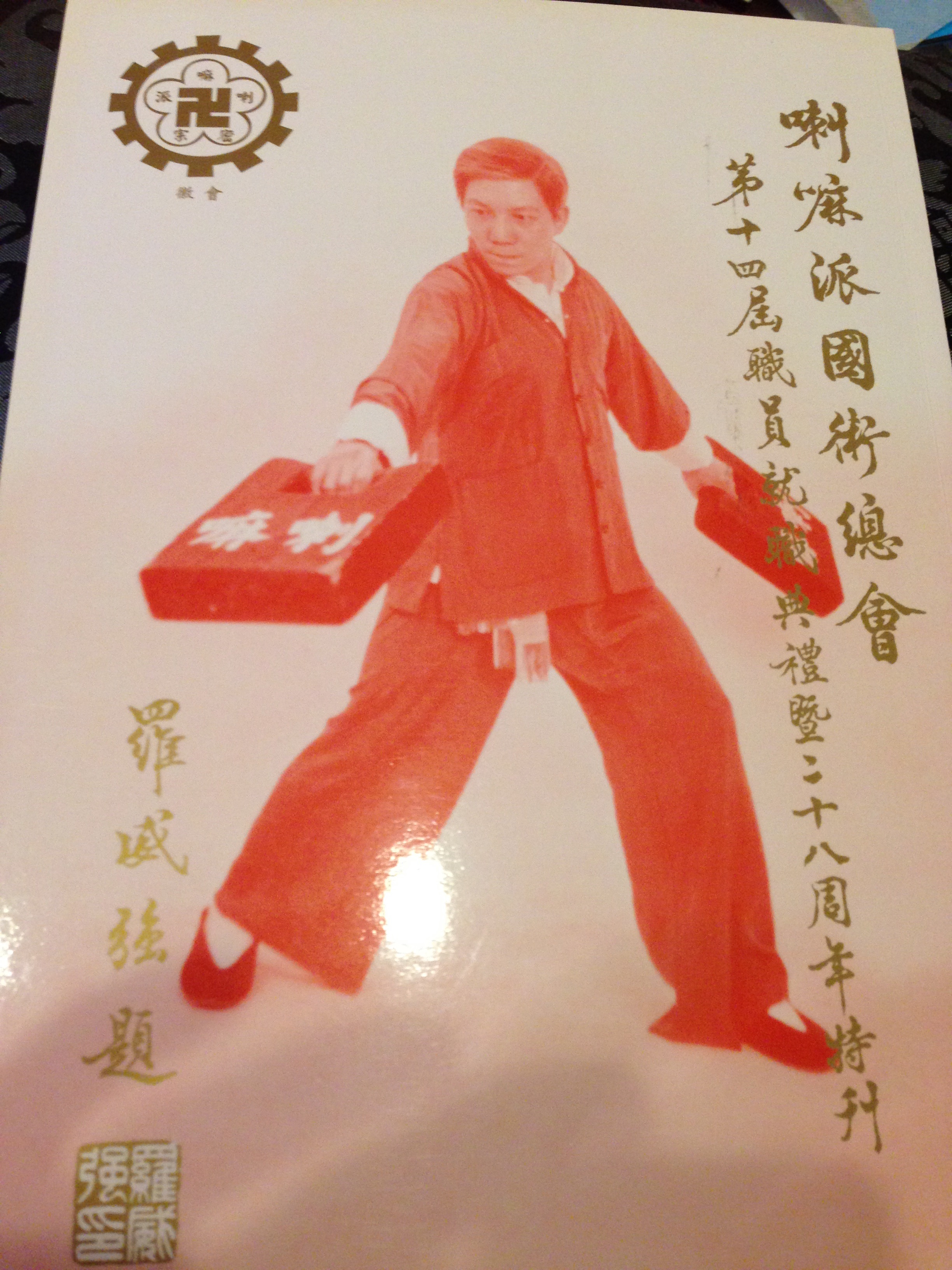
Excerpted from Special Issue of the 28th Anniversary of the Lama Martial Art Club
節錄自喇嘛派國術總會第二十八周年紀念特刊
The Tibetan Lama Style Martial Art is a unique form of Chinese martial art which was probably first developed by the lamas (monks of Tibetan Buddhism) in Tibet in the middle of Ming Dynasty (about 500 years ago). The lamas practised their unique style of martial art, which was based on the philosophy of Tibetan Secret Sect Buddhism and their perceptive understanding of human anatomy, for health and self-defence. While leading their religious life in the remote highland of Tibet, the lamas saw wild animals such as apes, white cranes and bears fighting with other animals for survival from time to time. From what they saw they got inspiration for the tactics of fighting and they continued to perfect their martial art system with it, making it more comprehensive.
The Lama Style Martial Art was subsequently introduced to Guangdong Province of Southern China by a lama called 'Elder Sing Lung' in the middle of the Ching Dynasty (about 200 years ago). He taught it to secular disciples, the most famous being Master WONG Yan-lam, who started to learn from Elder Sing Lung at his early teenage and became proficient in it through dedicated training for many years. After Master WONG had left Elder Sing Lung, he operated a money escort agency (Note: for providing armed escort to cash and valuable property being transported from one place to another against robbers) in Shenxi Province of Central Northern China. In his numerous money escort tours, Master WONG got plenty of opportunities to fight against bandits with what he had learnt from Elder Sing Lung. He thus accumulated much valuable experience of combat that he used to further improve his art.
Master Wong became a very famous martial artist, especially in his native Guangdong Province. He was nicknamed 'Ten Tigers of Guangdong' with nine other outstanding martial artists if the province at the time. At his old age, Master WONG returned to Guangdong from Shenxi and ran a martial art school where he trained quite a number of remarkable students, such as Master WONG Hon-wing who subsequently developed the 'Hop Ka Boxing', by teaching them the consummate 'Eight External Skills' where were part of the Lama Style Martial Art. At a later stage, Master WONG was invited to be a personal martial art instructor of Master CHOY Yee-kung, then a teenager coming from a rich family. Master CHOY learnt from Master WONG for many years. As he impressed Master WONG with his talent and dedication in training, he was eventually taught both the 'Eight External Skills' and 'Eight Internal Skills', i.e. all of Lama Style Martial Art by Master WONG. Master CHOY was in fact the last disciple of Master WONG and the inheritor of the latter's art.
Master CHOY was born in the late Ching Dynasty, a regime of Manchurian rule. Being a patriotic young man, Master CHOY followed Dr. SUN Yat-sen, the founder of modern China, to start the revolution against the anachronistic and corrupt Manchurian monarchy. Not being a man with political ambition, Master CHOY declined to accept any office upon the eventual overthrow of the Ching Dynasty and the setting up of the Nationalist Chinese Government in 1911. Instead, Master CHOY chose to lead an easy life by traveling to different places. He also taught the Lama Style Martial Art to students in Guangdong Province and Shanghai. Master HUNG Yuet-ki and Master CHAN Kwan-ng of Guangdong Province, both famous martial artists, were the outstanding students of Master CHOY. In his late years, Master CHOY took Master LO Wai-keung, who had first learnt from Master CHAN Kwan-ng, as his last disciple.
The Tibetan Lama Style Martial Art puts much emphasis on footwork, speed and power of action. The basic tactic of fighting in the art is to give the enemy the most severe blow at the very beginning so as to retard him and end the fight as soon as possible. Thus, it is very effective for self-defence. Its famous motto of 'Strike only arteries and veins; punch and move sideways simultaneously; may well represent its concept of fighting. However, other than for attack and defence, the practice of Tibetan Lama Style Martial Art, especially the 'Pliable Eight Polar Fists' and breathing exercises, are also good for health and vitality. It is because they will help the practitioner to concentrate and relax as well as properly exercise their internal organs and joints. Hence, the Lama Style Martial Art can be regarded as both an effective skill of self-defence and a good physical and mental exercise beneficial to learners of different ago and background.
清朝道光年間,藏僧星龍長老,外號「金鈎李鬍子」,南來廣東,其始以其自身技藝,收服珠江海盜「張保仔」成為師友,後因張保仔變節降清,星龍長老失意之餘,一怒之下卓鍚肇慶鼎湖山之上慶雲寺,傳授拳藝與寺中僧人,以娛晚景。晚年收得「王隱林」為徒,盡傳西藏喇嘛派絕學,包括「醫術」「用藥」「拳械」等等。「王隱林」為嶺南三英之一,獨腳銅人王平之獨生子,王隱林早年削髮學藝,後技成下山還俗,是為星龍長老俗家漢人首徒。
「王隱林」技成下山後,遠赴陝西一帶,隱身鏢局,廣結四方英豪,期復大漢河山,惜壯志難成,晚年本落葉歸根計,返粵設立醫館,行醫壽世兼教授拳術,初期命名「俠家」,獨樹一幟於嶺南,因其拳法有獨到之處,聲名遠播,為當時「廣東十虎之首」,館設於羊城黄沙兼善大街。初傳其外八門絕技,得其授與外八門絕技者有黄漢榮【滿榮】,潘浩 ,袁煥,二路正等人,其中尤以黄漢榮得技最精,其練功時百斤耳牌揮洒自如,其力之雄,一時無倆,其拋搥等閒之輩難膺其鋒,現今能以武馳譽於梨園者,如已故之伍冉明,關德興等皆是其再傳弟子。
王隱林年事漸高,又兼以黄漢榮侍奉未週,吝不傳以內八門秘技,迨得門人李英泉之介紹,收蔡懿恭為徒,以生養死葬為基本條件,才盡傳絕學,包括外八門,内八門等武功,以其武技源肇西藏喇嘛僧人,故稱號「喇嘛派」。
蔡懿恭排行第七,故人多稱呼為「蔡老七」,籍廣東中山縣人,其父以洋務致富,業務遍海內外,蔡師生性豪俠,喜結俠義之仕,仗義疏財,一擲千金無吝嗇,歷隨國父「孫中山」先生從事革命工作,故為清廷所不容,避難香海,借洋場庇護,因其尊師重道故迎隱林公至香海侍奉,迨王隱林之子「王懷」,因跟隨蔡老七工作為清廷所捕,「王隱林」憶子成疾,病逝於鄉。
蔡師秉承師訓,貫徹革命之志,南渡暹羅,東走扶桑,聯絡海外志士,更名「羅述祖」,以武會友,直至革命成功,歸羊城定居,以家資富有,薄官宦,隱於市,過其優閒生活,五十年代移居香海,因年事漸高故擇徒而授以絕學,今譽滿遐邇之武學大師「陳君五」,「孔乙已」,「尹民」等均為其得意門人,晚年則收有「羅威強」。
「羅威強」是為「蔡懿恭」宗師關門弟子,嫡傳門人,盡獲蔡師傳授喇嘛派武功及醫術,懸壼濟世,創設健身學院及成立喇嘛派國術總會,聯絡海內外喇嘛派門人,發揚「喇嘛派」武藝。
Word processed by Lama Pai, Parry Fung
喇嘛派 馮拍濤 謹錄